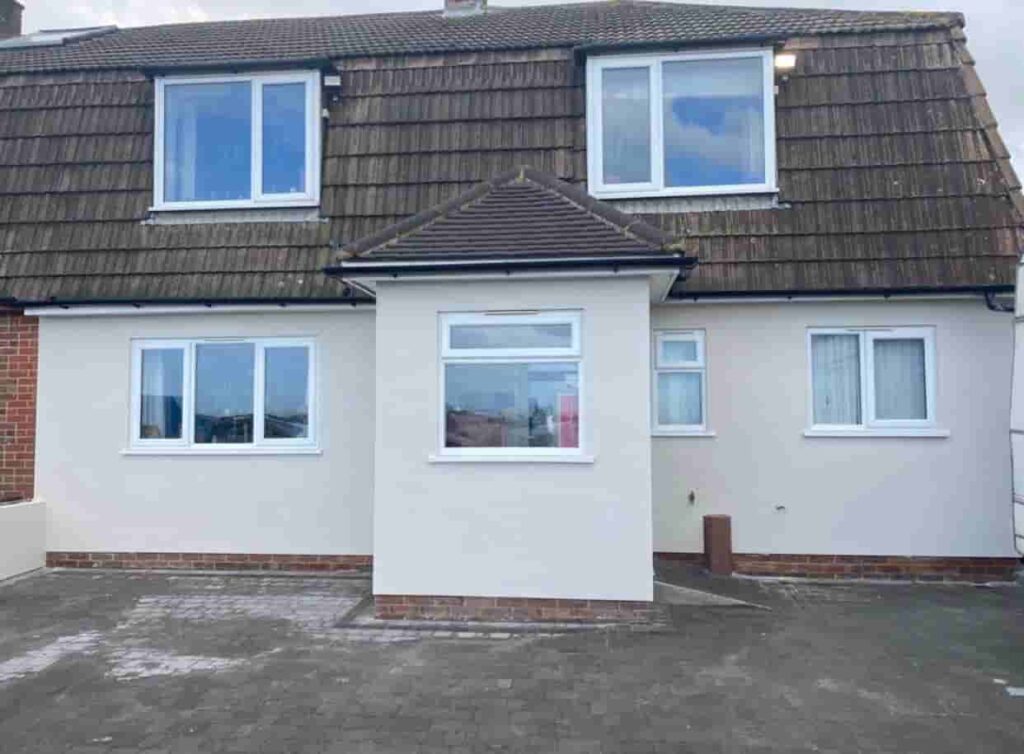
Guttering performs a simple but essential role within a roofing system: it collects rainwater flowing from the roof and directs it towards the downpipes. For this process to work effectively, the guttering needs to be correctly positioned and aligned. Even relatively small changes in level can affect how efficiently water moves along a gutter run.
For homeowners in Kidderminster, Worcestershire, poorly aligned guttering can result in standing water, overflowing sections and rainwater escaping around the roofline. Correct alignment helps the complete rainwater system work as intended, protecting fascias, soffits and surrounding areas from unnecessary exposure to water.
How Gutter Alignment Helps Rainwater Drain Correctly
Gutters should not simply be attached to the edge of a roof and expected to work automatically. Their position, fall, support and relationship with the downpipes all influence drainage.
A correctly installed gutter has a controlled route towards its outlet. When that route is interrupted by sagging, incorrect levels or movement, water can begin collecting where it should otherwise continue flowing.
Gutters Need an Appropriate Fall
Although guttering can appear almost level when viewed from the ground, it generally needs a carefully controlled fall towards the appropriate outlet.
This encourages rainwater to travel through the gutter rather than remaining within sections of the channel.
The fall should be consistent. If one part of the gutter sits lower than surrounding sections, it can create a depression where water accumulates. If the alignment directs water away from the outlet, drainage performance can be significantly reduced.
Correct setting out during installation is therefore important.
What Happens When a Gutter Sags?
Sagging is one of the clearest examples of poor gutter alignment.
A low section creates an unintended collection point. During rainfall, water can settle there instead of moving efficiently towards the downpipe.
Over time, the additional weight of retained water can place further strain on the gutter and its supporting brackets. This can allow the section to move even more, making the original alignment problem progressively worse.
Correcting the sag involves determining why the gutter has moved rather than simply emptying the standing water.
Standing Water Can Reveal Alignment Problems
After rainfall has stopped, a properly functioning gutter should be able to discharge most of the collected water towards its outlet.
If substantial water consistently remains in one section, the alignment should be investigated.
Standing water can indicate:
- A low point in the gutter run
- Movement of supporting brackets
- Incorrect falls
- Distortion of the gutter
- Problems around a joint
- An obstruction affecting normal flow
Not every drainage problem is caused by alignment, so the gutter should be assessed as a complete system.
Incorrect Alignment Can Cause Overflow
When water cannot move efficiently towards a downpipe, the affected gutter section can fill more quickly during rainfall.
Once its capacity is exceeded, water may spill over the edge.
Overflow is sometimes assumed to mean that a gutter simply needs cleaning. Blockages can certainly restrict drainage, but alignment should also be considered when the gutter is clear yet continues to overflow.
A low or incorrectly positioned section can prevent water from reaching the outlet efficiently even when there is nothing physically obstructing it.
Overflowing Water Can Affect Fascias and Soffits
Guttering sits alongside other important roofline components.
When water repeatedly escapes from an incorrectly aligned gutter, adjoining fascia and soffit areas may receive more moisture than intended. Persistent overflow can also leave visible staining around the roof edge.
This demonstrates why guttering should not always be considered as an isolated feature.
At Kidderminster Roofing Repairs, assessing the surrounding roofline alongside the guttering can help establish whether an alignment problem has affected neighbouring components.
The Gutter Must Be Positioned Correctly Beneath the Roof Edge
Alignment is not only about the direction water travels along the gutter.
The gutter also needs to sit in an appropriate position relative to the roof covering so that rainfall leaving the roof is collected effectively.
If the gutter has moved too far away, dropped significantly or become distorted, some water may pass behind or beyond it instead of entering the channel correctly.
This can create what appears to be a drainage problem even though the gutter itself is not blocked.
The relationship between the roof edge and guttering should therefore form part of any inspection.
Gutter Brackets Help Maintain the Correct Position
Supporting brackets play an important role in keeping guttering aligned.
If brackets become loose, damaged or inconsistently positioned, sections of gutter can begin moving. One area may drop while another remains correctly supported, creating unwanted changes in level.
Simply repositioning the gutter without establishing why the support changed may not provide a lasting solution.
The brackets and the material to which they are secured should be checked so that the gutter can remain properly supported after adjustment.
Fascia Condition Can Affect Gutter Alignment
Because guttering is commonly supported along the fascia, movement may sometimes indicate a problem beyond the gutter itself.
If the supporting fascia has deteriorated or become unstable, gutter brackets may no longer remain securely positioned. This can result in recurring sagging or changes in alignment.
In these circumstances, repeatedly adjusting the gutter without considering the fascia may only address the visible symptom.
A wider roofline inspection can establish whether the supporting components remain suitable.
Joints Need to Remain Correctly Positioned
Gutter runs often contain several connected sections.
If movement occurs, joints can become stressed or move away from their intended position. This may contribute to leakage at connection points even when the guttering material itself remains serviceable.
Correct alignment helps neighbouring sections meet as intended and reduces unnecessary strain around joints.
Where leaking joints occur alongside obvious sagging or movement, both issues should be investigated together.
Downpipe Position Is Part of Effective Drainage
The gutter and downpipe need to function as one connected rainwater system.
Correct gutter alignment directs water towards the outlet feeding the downpipe. If the gutter falls away from this point or contains a significant low spot before reaching it, drainage can become inefficient.
The outlet itself should also remain clear and correctly connected.
There is limited value in correcting the gutter fall if water cannot then move freely through the next part of the drainage route.
Heavy Rain Can Expose Poor Alignment
Minor alignment problems may be difficult to notice during light rainfall.
When rainfall becomes heavier, considerably more water enters the gutter over a shorter period. Any restriction caused by poor falls or low sections can then become much more obvious.
Homeowners may notice water spilling over one particular section even though other parts of the gutter continue working normally.
Observing where overflow occurs can provide useful information when investigating the cause.
Repeated Overflow in One Area Deserves Investigation
If the same gutter section regularly overflows, it should not automatically be assumed that leaves or debris are responsible each time.
Repeated problems can indicate that water is naturally being directed towards an unintended low point.
The condition of the gutter run, brackets, joints, fascia and outlet should be assessed to understand why the problem keeps returning.
Correcting the underlying alignment can be more effective than repeatedly responding to the overflow itself.
Misalignment Can Develop Gradually
Guttering does not necessarily move suddenly.
Small changes can develop gradually as brackets loosen, supporting materials deteriorate or individual sections experience repeated loading. Because the change is slow, it may not be visually obvious until drainage performance begins to suffer.
Signs can include:
- Water remaining in the gutter after rain
- Overflow repeatedly occurring in one place
- Sections appearing lower than neighbouring areas
- Gutter joints beginning to leak
- Water running behind the gutter
- Visible movement around brackets
- Inconsistent spacing along the roofline
These symptoms provide useful reasons to have the guttering assessed.
Cleaning Will Not Correct Poor Gutter Falls
Keeping gutters clear is important, but cleaning and alignment solve different problems.
Removing leaves and debris restores the available route through the gutter. It does not correct a section that slopes in the wrong direction or contains a significant depression.
If a clear gutter continues holding water or overflowing, its physical position should be considered.
This distinction can prevent repeated cleaning from being used as a solution for a problem caused by the gutter installation or support.
Correct Alignment Helps the Complete Roofline Work Together
The roof, guttering, fascias, soffits and downpipes form connected parts of the property’s weather-management system.
Rainfall needs to leave the roof, enter the gutter, travel towards the outlet and then continue through the downpipe. A weakness at one stage can affect the performance of the others.
Correct gutter alignment maintains this controlled route.
Rather than allowing water to collect or escape around the roof edge, it helps ensure rainfall is directed through the system as intended.
Why Professional Gutter Assessment Is Useful
It can be difficult to judge gutter falls accurately from ground level. A section may look reasonably straight while containing enough variation to affect drainage.
A professional inspection can consider the complete gutter run, including its alignment, brackets, joints, outlets and supporting fascia.
At Kidderminster Roofing Repairs, the aim is to identify why the guttering is not draining correctly before recommending appropriate work. If the problem is localised, attention can remain focused on the affected area rather than assuming the entire roofline requires unnecessary work.
Correcting the Cause Helps Prevent Recurring Problems
Successful gutter repair should do more than temporarily stop an overflow.
If a bracket has moved, the reason should be considered. If the gutter is sagging, its support and levels need checking. If water is escaping behind the channel, its position relative to the roof edge may need attention.
By identifying the underlying cause, the guttering can be restored to a position that allows it to perform its drainage function more effectively.
This approach is particularly valuable when the same section has caused problems repeatedly.
Conclusion
Correct gutter alignment is important because rainwater needs a consistent route towards the downpipes. Sagging sections, incorrect falls and poorly supported guttering can create low points where water collects, leading to inefficient drainage and possible overflow around the roofline.
A drainage problem is not always caused by a blockage. The condition of the brackets, fascia, joints, gutter levels and outlets can all influence how effectively the system works.
If the guttering at your property in Kidderminster, Worcestershire is holding water, sagging or repeatedly overflowing, contact Kidderminster Roofing Repairs. We can assess the gutter alignment and surrounding roofline to identify the cause and recommend appropriate work to restore effective drainage.
Call us on: 01562 540 693
Click here to find out more about Kidderminster Roofing Repairs
Click here to complete our contact form and see how we can help with your roofing needs.